




 September 17, 2026
157
September 17, 2026
157
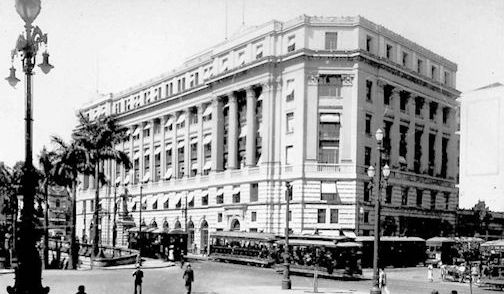
Introducing one of the most famous sons of Bruce County you’ve never heard of — Alexander Mackenzie … not to be confused with Alexander Mackenzie, Canada’s second prime minister, or with Alexander Mackenzie, explorer.
No, this is Alexander Mackenzie (1860-1943) of Kincardine, or rather, Sir Alexander, since he was knighted by King George V in 1919.
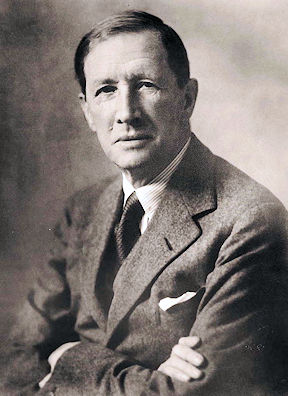 Although he was the son of a local blacksmith and one of 10 children, he rose to improbable heights — head of Brazil’s largest power company.
His parents, Donald Mackenzie (1820-1888) and Catherine McLeod (1827-1924), emigrated from Sutherlandshire, Scotland, in 1851, settling in the fledgling Town of Kincardine, then called Penetangore, founded in 1848.
Their first child, Annie, was born in 1851. Alexander came along on June 30, 1860, the fifth in what would be a family of eight girls and two boys.
When Alex was born, his father could not be said to be rich. He had only his blacksmith shop, a wife and five children, and three cows worth $24. Moreover, by the late 1860s, there were five blacksmiths in Kincardine.
Sir Alexander Mackenzie (right) in 1941 at Memoria da Electricidade
Despite the competition, Donald Mackenzie’s forge on Queen Street was nicely profitable, so much so that in 1879, he bought a farm including a 15-room mansion named “Bellevue.” It was on Lots 5 and 6, Concession 1, Kincardine Township, a property which had belonged to William Hurdon, MP for Bruce South.
Alexander Mackenzie attended Kincardine Public School and High School. The question was, where would he go after that?
As it happened, his father was a Liberal, active in the local party. Donald Mackenzie formed a friendship with Edward Blake, a Toronto lawyer with Liberal connections. Blake was elected MP for Bruce South at two federal elections: 1872 and 1874. At that time, MPs could also run provincially, and Blake was elected Ontario MPP for Bruce South in 1867 and 1871, and served as premier of Ontario in 1871-72.
The Mackenzie-Blake link may have steered Alexander toward the study of law. In any case, with high school out of the way, young Alex, then 17, boarded the Wellington, Grey and Bruce railway, bound for Toronto and Osgoode Hall law school. He articled as a lawyer with Edward Blake’s firm, Blake, Lash and Cassels, one of Canada’s leading law firms, and was called to the bar in 1882.
When he was 29, his firm handed him an assignment which was to change his life: go to Brazil, oversee the legal arrangements for a new Canadian utility company and come back in six months.
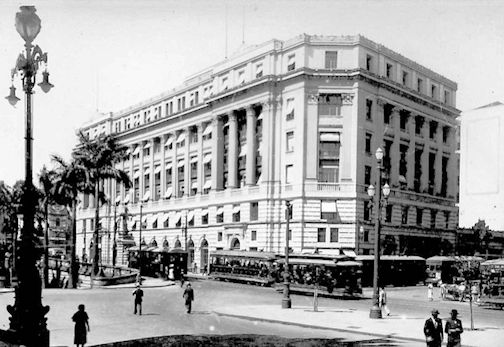
The Alexander Mackenzie Building in São Paulo, with electric streetcars, about 1930; today, the interior is a shopping centre, “Shopping Light”
A group of Canadian railway engineers and investors had seen interesting railway and hydroelectric possibilities in Brazil. The group focused on an old tramway in the City of São Paulo which provided public transport using open streetcars drawn by teams of donkeys. April 7, 1899, the investors founded the São Paulo Tramway, Light and Power Co. in Toronto. (It was also known as Light São Paulo or simply The Light.)
Light São Paulo bought the old tramcars and a stableful of donkeys but it needed a lawyer on the spot to handle the legal work — Alexander Mackenzie. And so in June 1899, the lawyer from Kincardine boarded a steamship for Brazil.
There, he learned Portuguese, studied Brazilian law and moved into Brazilian high society. Instead of returning home after six months, Mackenzie stayed on at São Paulo Light, becoming its vice-president from 1902-12 and bringing the city hydroelectric power for lighting, telephones and electric streetcars.
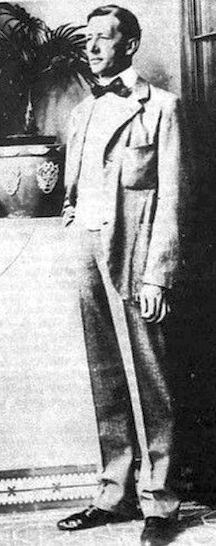 Alexander led a quiet life, staying out of the limelight. We know that he took a trip to Toronto in 1908 and married Mabel Blake, daughter of Toronto lawyer Samuel Hume Blake (the brother of his father’s friend, Edward Blake). The newlyweds made their home in Brazil.
Sir Alexander Mackenzie (right) at Brascan
São Paulo Light became Brazilian Traction, Light and Power (later, Brascan) in 1912. In its day, it was one of the world’s largest utilities and Canada’s largest foreign holding.
Alexander Mackenzie left the company in 1912, moving back to Canada. However, he returned to Brazilian Traction in 1914 as a legal advisor, but not for long. He assumed the presidency of Brazilian Traction when his partner, Frederick Stark Pearson, died in the 1915 sinking of the "Lusitania."
In the late 1920s, Mackenzie commissioned a huge headquarters for Brazilian Traction in São Paulo. Completed in 1929, the building is named after him: Edificio Alexandre Mackenzie. It is one of the icons of São Paulo architecture.
The Bruce County boy retired from Brazilian Traction in 1928 and took his wife to live in Italy at his villa, “Benivieni,” outside Florence. He also had a country house in England ("High Cockett" at Twyford, Berkshire).
For 10 years, they spent winters in Italy and summers at “Ardloch”, in Kincardine. That was an 11-bedroom mansion bought in 1912, at 219 Lambton St., Kincardine. (It was designated an Ontario heritage building in 1977. and today, it is home to the Kincardine Royal Canadian Legion, Branch 183.)
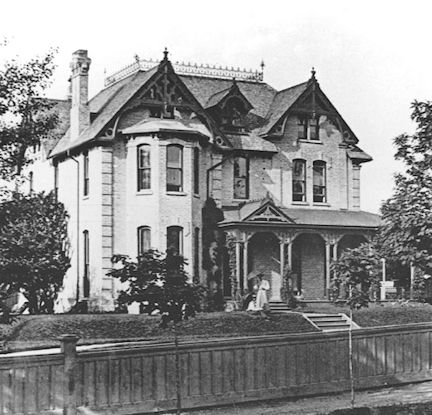
Built in the 1890s, Ardloch is now the home of the Kincardine Legion; photo courtesy of the Kincardine Legion, Branch 183
Finally, in 1938, the Mackenzies moved to Kincardine. (They did not have any children.) Alexander Mackenzie died at Ardloch of throat cancer, July 12, 1943, and was buried in Kincardine Cemetery.
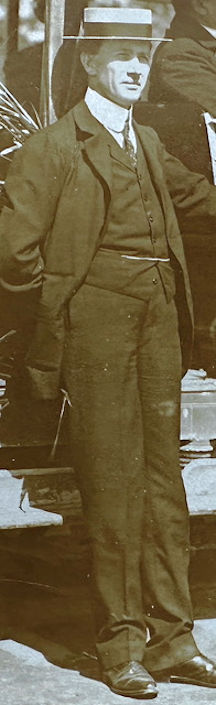 Kincardine benefitted from Mackenzie’s philanthropic gestures. He donated a shoreline park to the town, built the lawn bowling and tennis grounds, and donated a manse to Knox Presbyterian Church. He also supported Kincardine General Hospital.
Mackenzie (right) about to board one of his streetcars; photo courtesy of Allan Thompson
Learn much more about Kincardine’s famous son at the Historical Society’s annual meeting, Saturday, Oct. 24, at Noon, in Mackenzie's own home, the Kincardine Legion. Allan Thompson, head of Carleton University’s journalism program, will reveal how Sir Alexander Mackenzie electrified Brazil. Tickets are $35 each, dinner included; available by E-transfer to bchsregister@gmail.com.
The Historical Society has just published its latest book, “Furrows of Bruce County: A harvest of stories from the farm.” For a copy, stop by our booth in the Souvenir Tent at the International Plowing Match near Walkerton, Sept. 22-26. Or contact our book sales director, Bill Stewart (willstew@bmts.com). “Furrows” is also available in Bruce County bookstores.
Related Stories
No related stories.