




 August 3, 2026
559
August 3, 2026
559
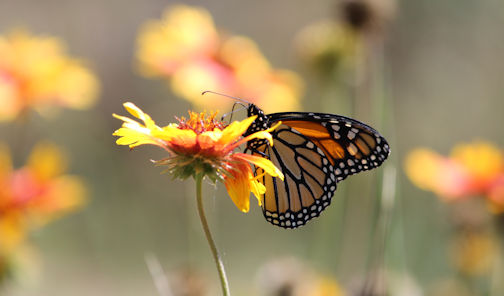
“The butterfly is a flying flower, the flower a tethered butterfly.” This line, written by 18th-Century French lyric poet Ponce Denis Écouchard Le Brun, perfectly describes my native plant gardens in the middle of summer.
Whether working in the house or out in the yard, I am constantly distracted by some movement, some flash of colour, as yet another butterfly glides by or flits erratically in search of nectar or a place to deposit its eggs. I can’t help but drop everything, grab my camera and go in search of a close-up encounter.
While my habitat gardens and sustainable practices are intended to benefit the broader environment and its inhabitants, an abundance of butterflies is a welcome bonus and one I thought worth highlighting. This month’s column features information and photos of some butterflies that visited my property in the month of July.
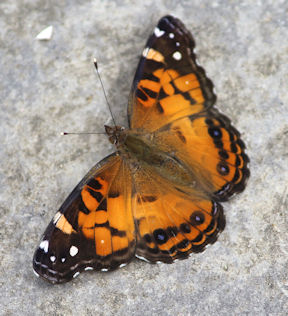 The American Lady (right) is a medium-sized orange, black and white butterfly found throughout North America. Its larval host plants are Pussytoes and Pearly Everlasting, both of which are found in my gardens.
The caterpillars are small, dark with pale cross bands and harmless spines. They protect themselves by creating little tents using the fuzz of the plant leaves and silk. The plant will look very stressed but will rebound after the larvae have moved on.
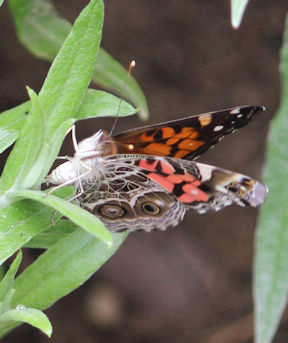
Adults visit a variety of flowers for nectar and are attracted to tree sap and decaying fruit. They over-winter as adults but may not survive very cold temperatures.
American Lady ovipositing (left)
July 5, an American Lady female intently laid eggs on the Pearly Everlasting plant for many minutes and seemed not to mind our hovering presence.
A week later, July 12, I was again in the right place at the right time with my camera and had the good fortune to photograph mating Northern Crescents.
This small butterfly is found throughout North America and is very common in Canada. In fact, in my gardens there are often too many to count.
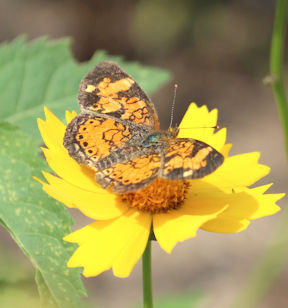
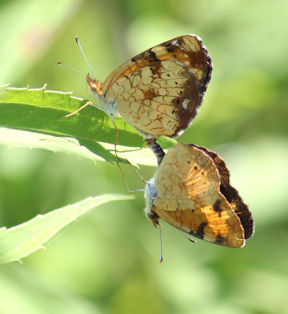
Northern Crescents mating (above, right)
Females lay green eggs in batches of several dozen on the underside of aster leaves, and newly-hatched larvae live and feed together in groups. Third-stage caterpillars hibernate and complete their life cycle the following spring. Adults drink nectar from a variety of flowers.
The White Admiral (below) is a striking medium-large butterfly with a dark body and white bands on both sets of wings. It’s common throughout Canada and north to the tree line, and its host plants are willow, aspen, poplar and birch. It is often found sunning on the ground or a leaf.
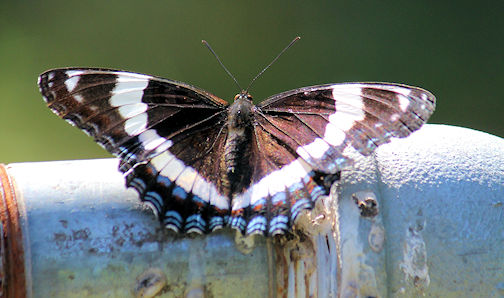
Larvae resemble bird droppings which is a great disguise. The caterpillars over-winter in a sleeping bag they create by rolling up a leaf and attaching it to a twig of a host tree. They then crawl inside to hibernate. When the tree begins putting out fresh, new leaves in the spring, the caterpillars emerge and continue feeding before forming a chrysalis which also looks like bird poop.
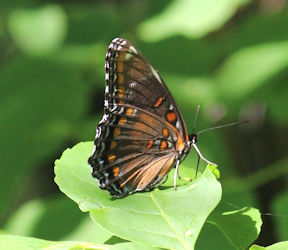 The Red-Spotted Purple (right) butterfly belongs to the same species as the White Admiral but looks completely different as it lacks the bold white diagonal band and looks more like a tail-less swallowtail.
These butterflies usually live in different regions, with White Admirals preferring cooler northern forests and Red-Spotted Purples living further south. However, their ranges overlap in southern Ontario and the Great Lakes region and they will readily mate with each other.
Their larvae and chrysalis also look like bird droppings.
The Little Wood Satyr (below) is a small- to medium-sized brown-gray butterfly with rounded wings and dark eyespots circled with yellow.
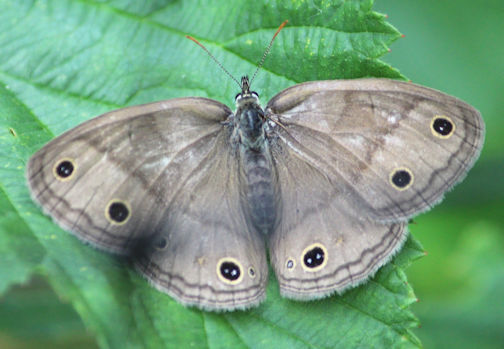
Its host plants are various native grasses and it is abundant along the edge of forests and meadows. The flight pattern is very erratic and bouncy and I find these butterflies difficult to photograph.
They over-winter as partially grown caterpillars and settle down near the ground among grass plants and leaf litter where they remain dormant throughout the cold weather. They do not build cocoons or nests.
The Canadian Tiger Swallowtail (below) has been particularly plentiful this summer, much to my delight. It is a large, yellow butterfly with black stripes and black wing edges and is found in most provinces and territories.
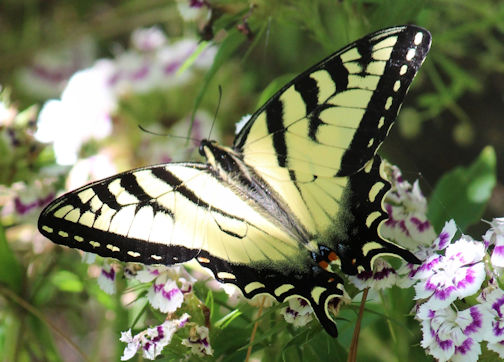
The Eastern Tiger Swallowtail is larger and brighter yellow. It’s a southerly variation but reaches Ontario.
The caterpillars eat the leaves of cottonwood, aspen, willows, wild cherry and ash. As they develop, their appearance changes, starting as mimics of bird droppings and becoming large bright green snake-like creatures with false eye-spots.
Adult butterflies drink the nectar of many flowering plants: thistles, sages, milkweed, lavender, anise, catmint, and others. Unlike many butterfly species, they are not particularly skittish and, therefore, fairly easy to photograph.
This July, I identified at least 15 different species of butterflies in my gardens but I’ll close this column with the iconic Monarch (below).
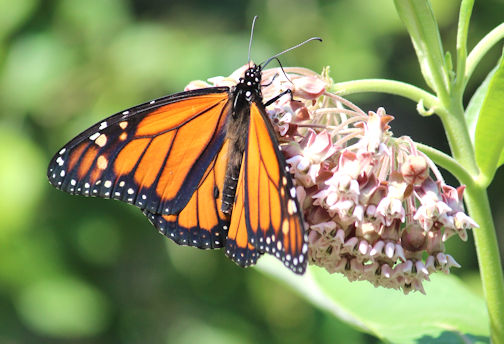
Renowned for their long-distance migration to Mexico for the winter, Monarchs take at least four generations to make the round trip. The generation that emerges here in late summer will make the journey to the wintering grounds and live seven to nine months.
Monarchs are a large butterfly easily recognizable by orange and black markings which warn predators that they’re toxic. This is because they rely exclusively on milkweed plants as host for eggs and for caterpillars to feed on. As caterpillars eat milkweed the poison, cardiac glycoside, builds up in their bodies.
Adults feed on a variety of nectar sources.
Several people have remarked about the seeming abundance of Monarchs this year. If you think you’re seeing more Monarch butterflies, you’re right. The CBC published an article about it recently: Seeing more monarchs? Great winter has had 'knock-on effect' for this summer's butterflies | CBC News. In mid-July when our milkweed was flowering, I often counted 10 or more Monarchs each time I went outside.
If you want to support Monarchs in particular and many other butterfly species in general, plant native milkweed and other wildflowers and native trees in your gardens. In fall and winter, leave leaves under trees and in flower beds to create habitat for larva, pupa or adults to shelter in.
You can also join projects on iNaturalist and contribute to scientific databases by making observations of butterflies. In fact, a special Monarch project is taking place this week.
The International Monarch Monitoring Blitz runs from July 31 to Aug. 9. Participants make observations of Monarchs, caterpillars and milkweed on the iNaturalist platform: mission-monarch.org/wordpress/mission-monarch-blitz/.
Fortunately, I need only go outside my house to observe and enjoy the flying flowers.
Written ByChristine Roberts is a retired elementary school teacher, past-president of Huron Bruce Nature, executive member of the Ripley and District Horticultural Society, volunteer for the David Suzuki Foundation, VON volunteer fitness leader and a passionate lover of nature.
Related Stories
No related stories.